Lecture 1: The Comparative Approach to Exercise Physiology
Slide 1
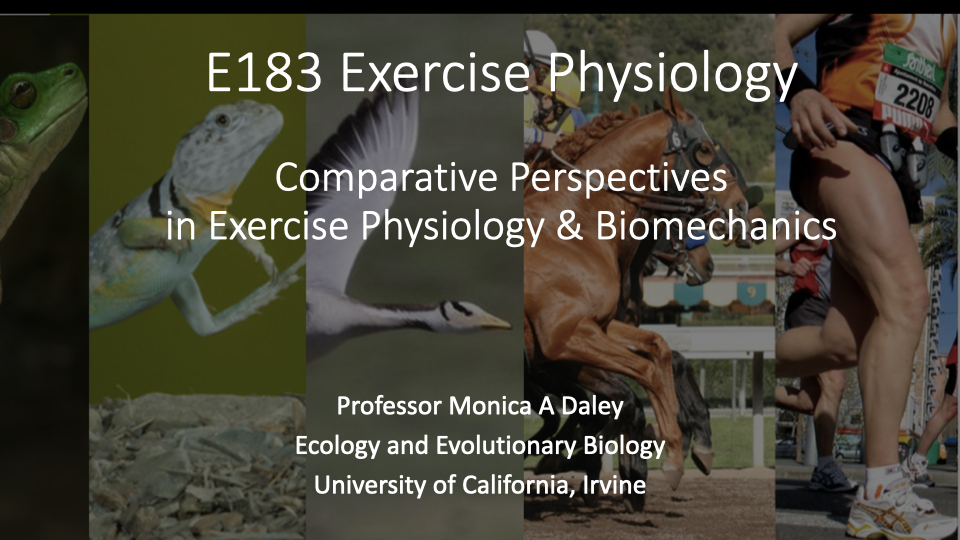
- This lecture introduces the course structure and key themes of E183 Exercise Physiology.
- The course takes a comparative approach, examining exercise physiology across species rather than focusing solely on humans.
- Professor Daley’s research background spans both human and comparative neuromechanics, informing this cross-species perspective.
Slide 2
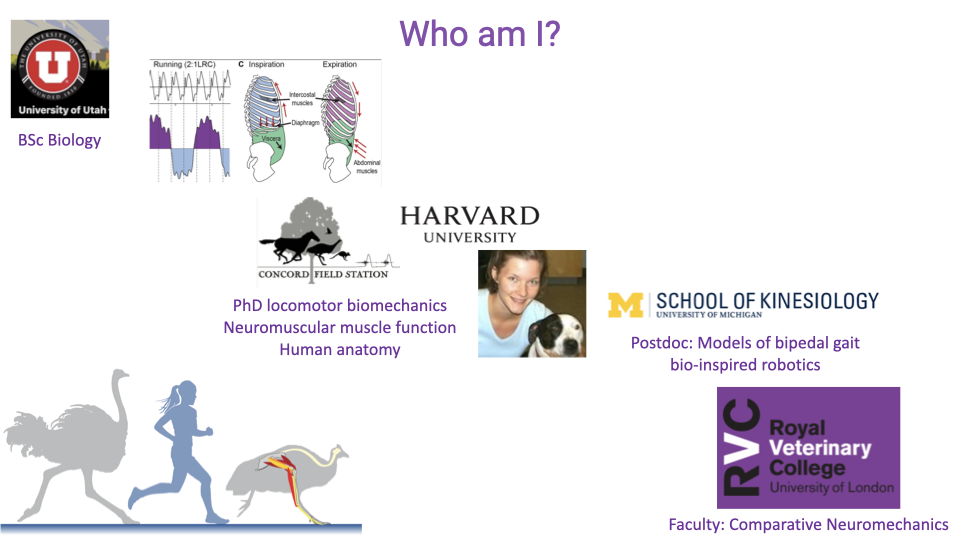
- University of Utah — Biology undergrad; first research on interactions between running and breathing in humans.
- Harvard University — PhD in comparative locomotor biomechanics; studied neuromuscular function in movement across terrestrial animals; also trained in human gross anatomy.
- School of Kinesiology (postdoc) — Developed models of bipedal gait for bio-inspired robotics, exoskeletons.
- Royal Veterinary College — Faculty for 12 years, led Comparative Neuromechanics lab and taught comparative anatomy and musculoskeletal biomechanics to veterinary students.
- UC Irvine (2019–present) — Runs both the Human Neuromechanics Lab and the Comparative Neuromechanics Lab.
Slide 3
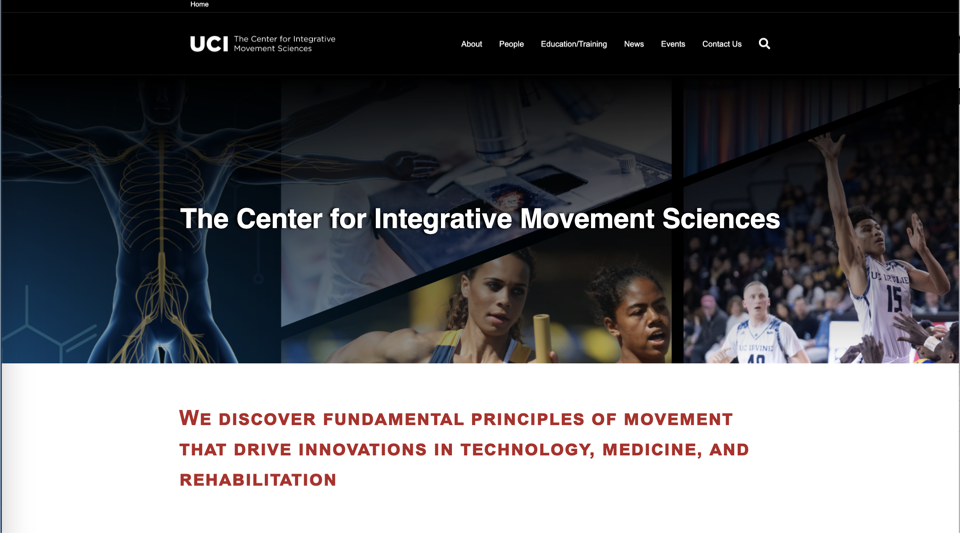
- Professor Daley directs the Center for Integrative Movement Sciences (CIMS) at UCI.
- CIMS is an interdisciplinary group spanning Biology, Engineering, the School of Arts (Dance), and the School of Medicine.
- The center focuses on fundamental principles of movement with applications in technology, medicine, and rehabilitation.
- CIMS runs a summer research program for undergraduates interested in movement science research.
Slide 4
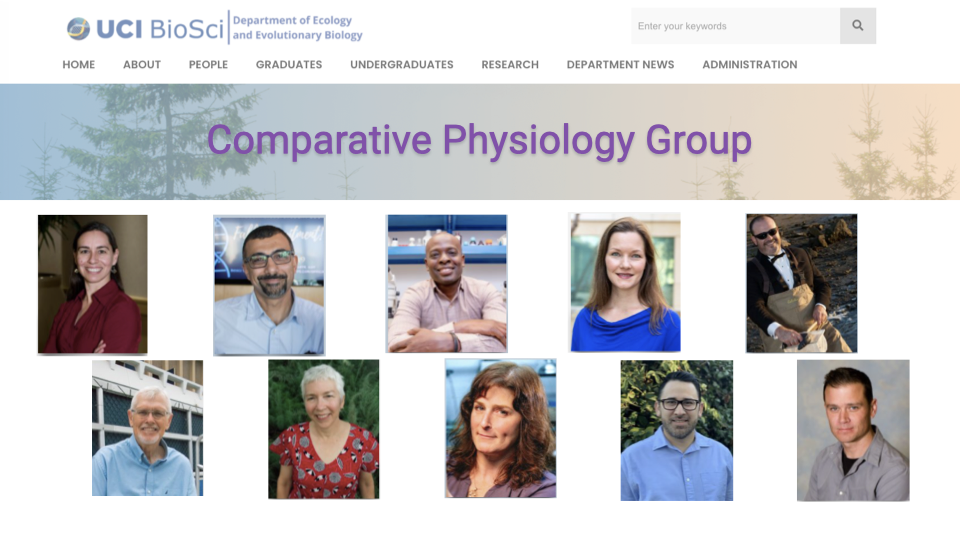
- The Comparative Physiology Group in the School of Biological Sciences includes 10 faculty members.
- Research across this group uses evolutionary and comparative perspectives to understand organismal physiology and evolution of form and function in animals.
- Faculty study diverse physiological systems beyond biomechanics, including endocrine systems, heat tolerance, and other physiological mechanisms.
Slide 5
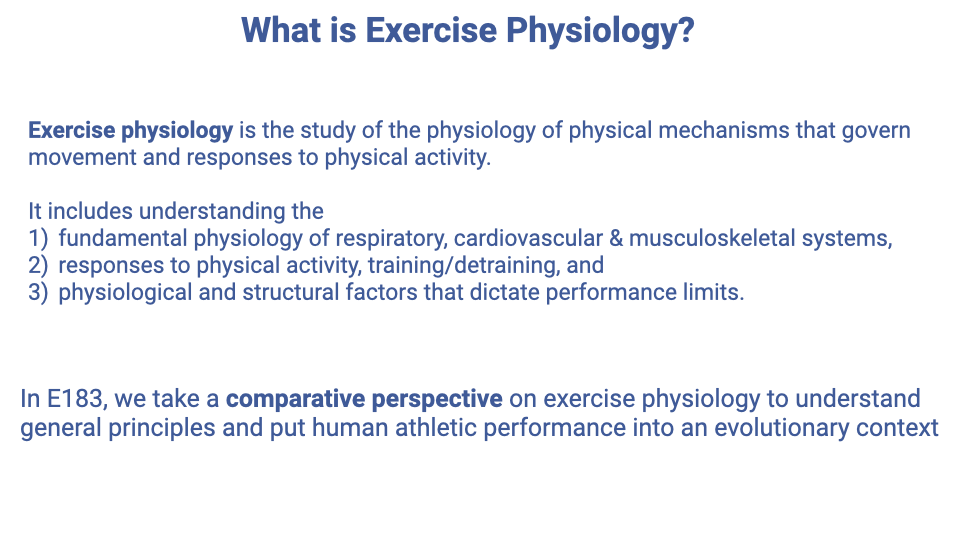
Exercise physiology is the study of the physiological mechanisms that govern movement and responses to physical activity. It includes understanding the:
- Fundamental physiology of the respiratory, cardiovascular, and musculoskeletal systems
- Responses to physical activity, including training and detraining effects
- Physiological and structural factors that dictate performance limits
- In E183, these topics are examined through a comparative perspective, placing human athletic performance into an evolutionary context.
- The course covers both short-term responses (immediate energy delivery needs) and long-term adaptations (training effects).
Slide 6
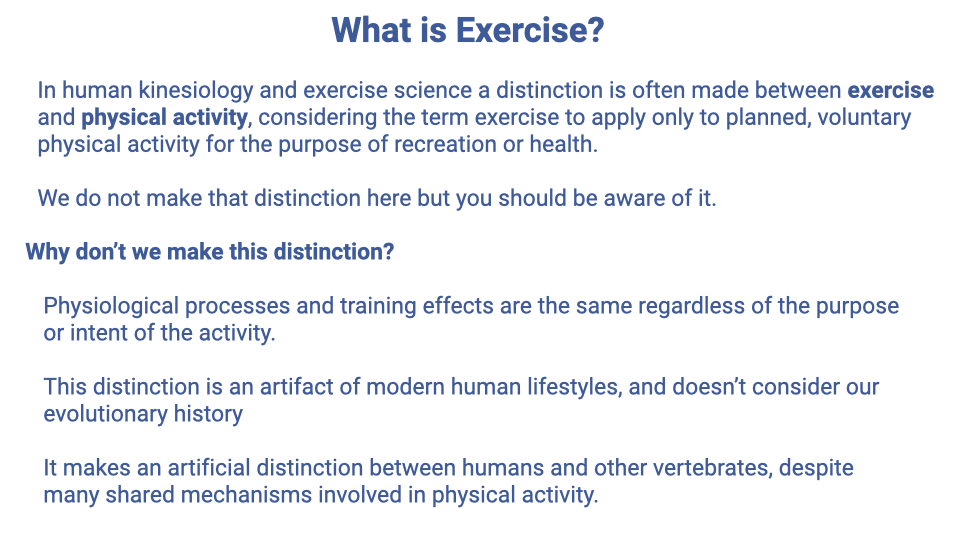
- In human kinesiology, “exercise” is sometimes defined narrowly as planned, voluntary physical activity for recreation or health, as distinct from general physical activity.
- This course does not make that distinction — daily physical activity is equally important for health and involves the same physiological processes.
- The narrow definition is an artifact of modern human lifestyles and does not account for evolutionary history.
- The course uses a broad definition: how humans and other animals respond to the physical demands of movement, including both aerobic and anaerobic energy delivery.
Slide 7
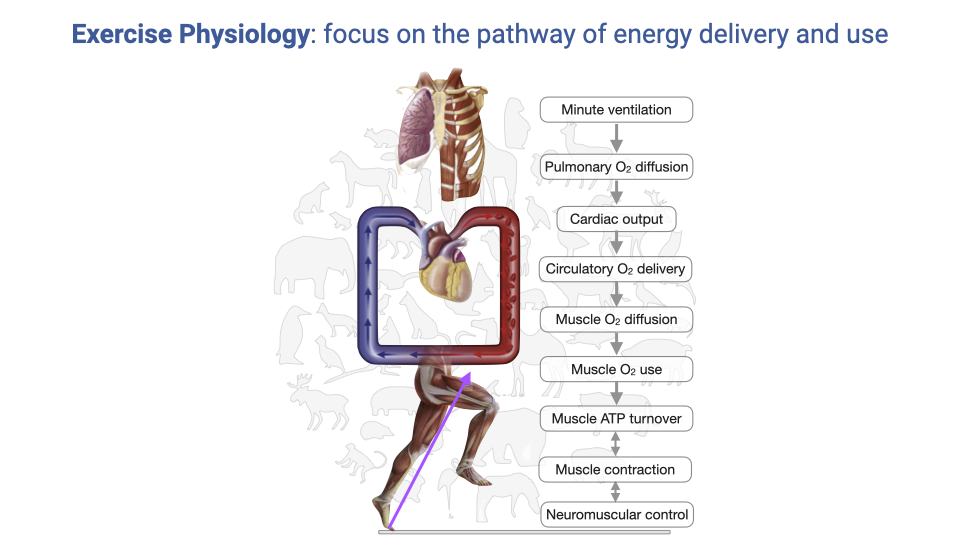
The course follows the oxygen delivery pathway from environment to tissues:
- Alveolar ventilation — moving air into the lungs
- Alveolar diffusion — gas exchange across the lung membrane
- Circulatory transport — cardiac output carrying O2 in the blood
- Circulatory O2 diffusion — delivery of O2 from capillaries to muscle tissue
- Mitochondrial O2 use — aerobic metabolism in the muscle
- Muscle ATP turnover — conversion to neuromechanical output (movement)
- Muscles are the only actuators in movement, and muscle physiology is strongly conserved across vertebrates.
- The course also covers neuromuscular control — how the sensory-motor system interacts with biomechanics to adapt to changing conditions during exercise.
Slide 8
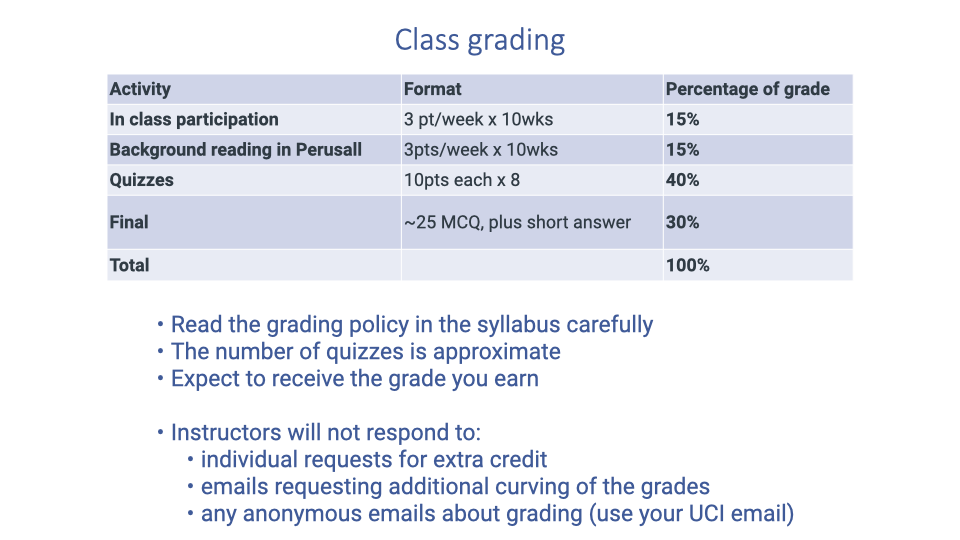
Grade breakdown
| Component | Format | Percentage |
|---|---|---|
| In-class participation | 2 pts/week x 10 weeks | 15% |
| Background reading (Perusall) | 5 pts/week x 10 weeks | 15% |
| Quizzes | 12 pts each x 8 | 40% |
| Final exam | MCQ + short answer | 30% |
- The number of quizzes is approximate; one lowest quiz score is dropped.
- Students should expect to receive the grade they earn — no additional curving.
- Instructors will not respond to individual requests for extra credit, grade curving, or anonymous emails about grading.
Slide 9
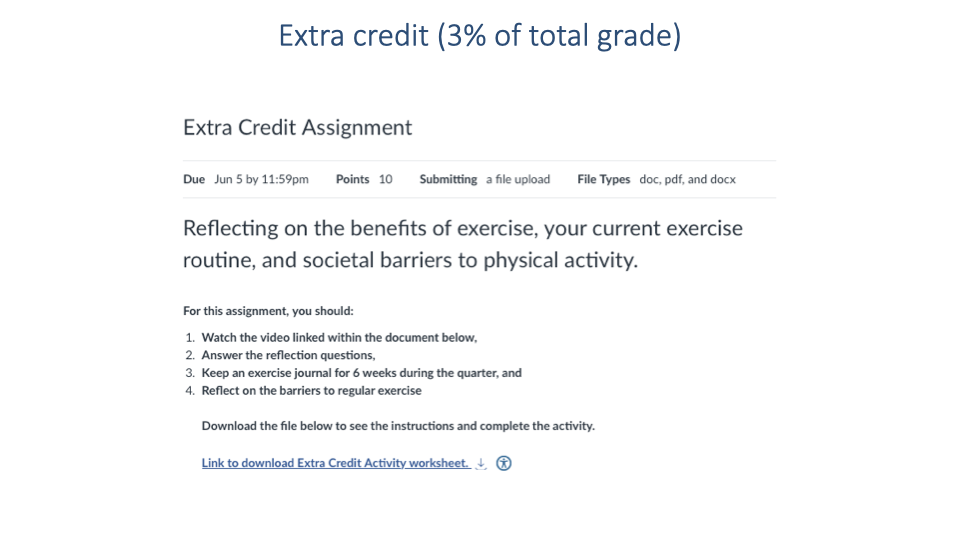
- One extra credit assignment is available, worth up to 3% of the total grade.
- Students log their physical activity over 6 weeks during the quarter and reflect on their exercise habits and barriers to regular physical activity.
- This is the only extra credit opportunity in the course.
Slide 10

- Students are responsible for maintaining academic integrity in all coursework.
- Prohibited activities include: using AI tools on assessments, sharing quiz/exam information on any platform (Discord, text, DM), aiding other students in cheating, and submitting participation cards for others.
- Violations will be reported and result in a zero score on the assessment.
Slide 11

- An in-class survey gauges student attitudes toward AI tool usage on assessments.
- The questions address temptation to use AI, expectations about peer behavior, and the effect of in-class vs. out-of-class quiz formats on AI use.
Slide 12

- Reliance on AI tools leads to poorer learning outcomes and lower retention.
- Learning occurs through the process of struggling to understand material independently — there are no shortcuts.
- AI tools have legitimate uses, but not as a shortcut in activities whose sole purpose is learning.
Slide 13

Quiz format
- Administered in class on Fridays via Canvas, 25 minutes in duration.
- Format: true/false, multiple-choice questions, and problem solving.
- Question banks ensure every student receives a different version of the quiz.
- In place of a quiz in Week 1 there is a Community Expectation Agreement, that counts 1 full quiz credit for completion.
- Make-up quizzes require confirmed documentation of excused absence, arranged in advance.
- One lowest quiz score is dropped before final grade calculation.
Slide 14
Study strategies
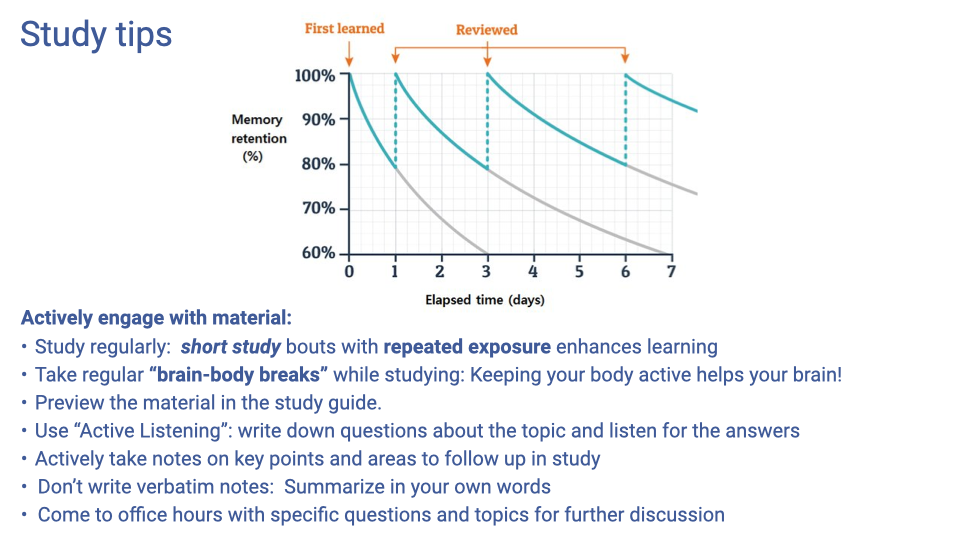
- Spaced repetition improves long-term retention: repeated short study bouts are more effective than cramming. The retention curve shows that each review session slows the rate of memory decline.
- Active engagement: preview study guide before class, write down 1–2 questions, and listen for answers during lecture.
- Take selective notes — key concepts and questions for follow-up, not verbatim transcription.
- Physical activity supports brain function, learning, and retention — take regular “brain-body breaks.”
- Bring specific questions to office hours.
Slide 15
Week 1 topics
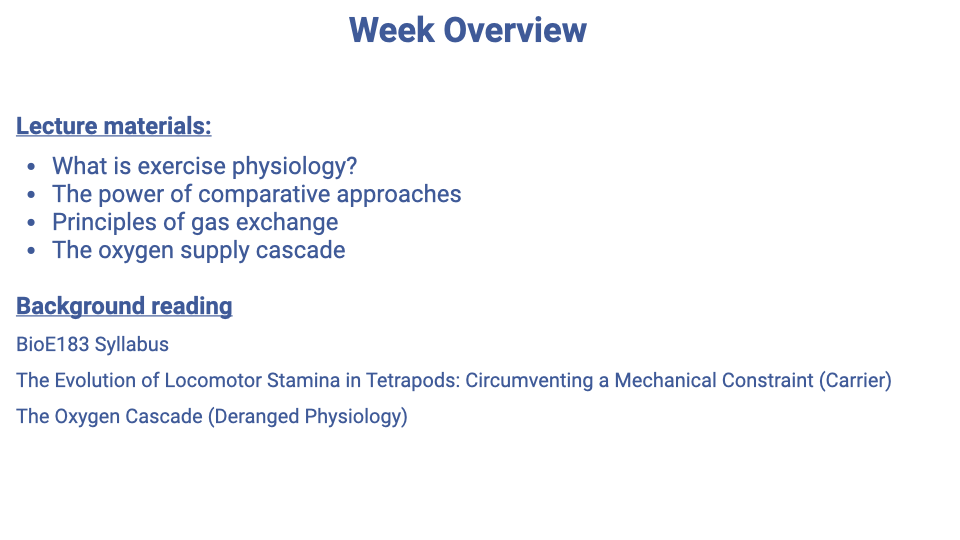
- What is exercise physiology?
- The power of comparative approaches
- Principles of gas exchange
- The oxygen supply cascade
Background reading
- BioE183 Syllabus
- Carrier — “The Evolution of Locomotor Stamina in Tetrapods: Circumventing a Mechanical Constraint”
- “The Oxygen Cascade” (Deranged Physiology)
Slide 16

- Weekly materials are organized on Canvas with links to Perusall readings, study guides, and video recordings.
- Background readings must be accessed through Canvas assignment links (not directly through Perusall) for grades to post correctly.
- After Week 1, the course follows a pattern of two content lectures per week (Monday/Wednesday) plus an interactive Friday session (not recorded).
Slide 17
Learning objectives
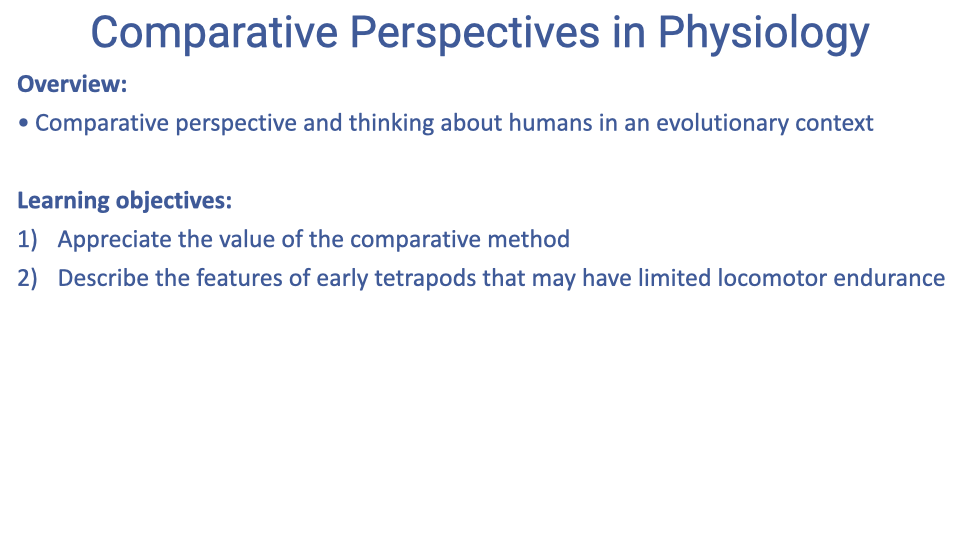
- Appreciate the value of the comparative method in physiology.
- Describe the features of early tetrapods that may have limited locomotor endurance.
- The remainder of this lecture shifts from course logistics to the scientific content: understanding humans in an evolutionary context through comparative physiology.
Slide 18
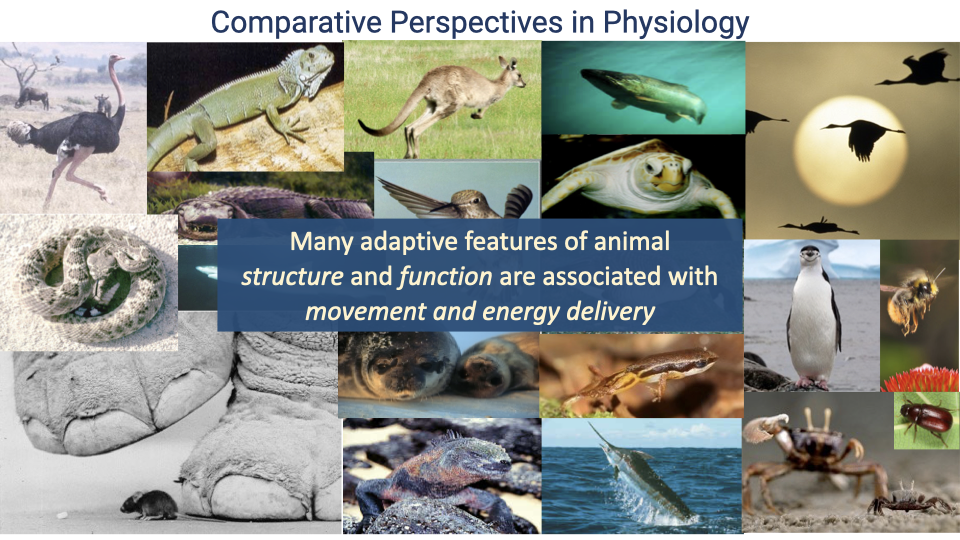
- The diversity of animal body forms reflects adaptations for movement and energy delivery.
- Physical activity is one of the main drivers of the structural and functional diversity observed among animals.
- The comparative approach uses this diversity to uncover fundamental principles of physiology and biomechanics.
Slide 19
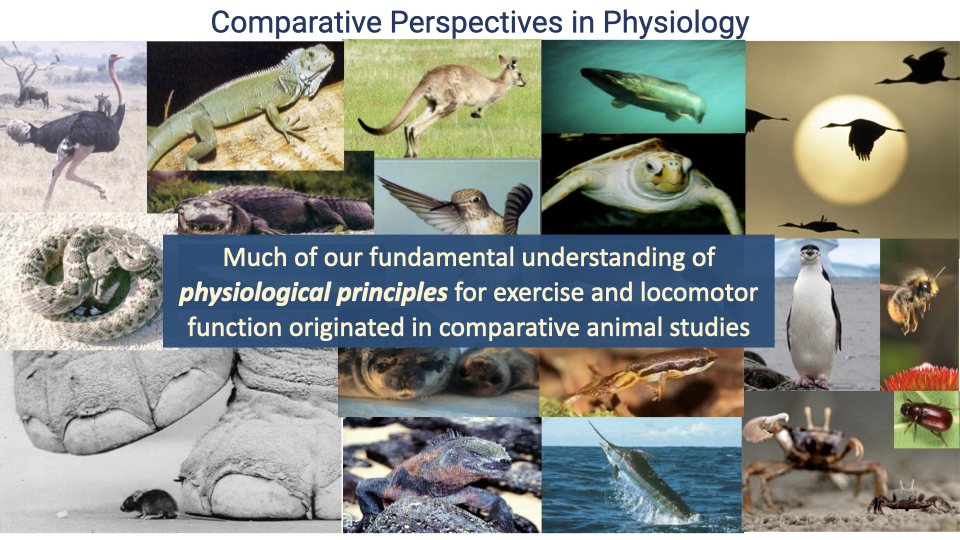
- Most fundamental physiological principles taught in human physiology textbooks were originally discovered through comparative animal studies.
- Many medical and pre-med students are unaware that key discoveries about physiological systems were worked out in non-human species.
- The comparative approach helps place humans in an evolutionary context, revealing both our exceptional traits and our limitations.
Slide 20
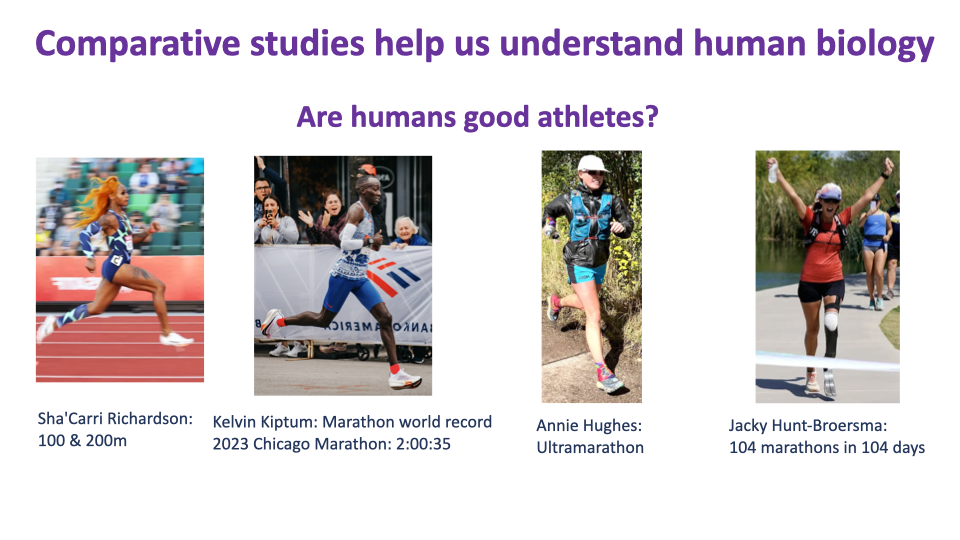
- The question “Are humans good athletes?” is explored through a comparative lens.
- Examples of exceptional human athletes include:
- Sha’Carri Richardson — world-class sprinter (100m and 200m)
- Kelvin Kiptum — marathon world record holder (2:00:35, 2023 Chicago Marathon)
- Annie Hughes — multiple first-place finishes in 100-mile ultra marathons
- Jacky Hunt-Broersma — transtibial amputee athlete who ran 104 marathons in 104 days
- While individual humans can achieve remarkable feats, the average human is not athletically exceptional compared to many other species.
Slide 21
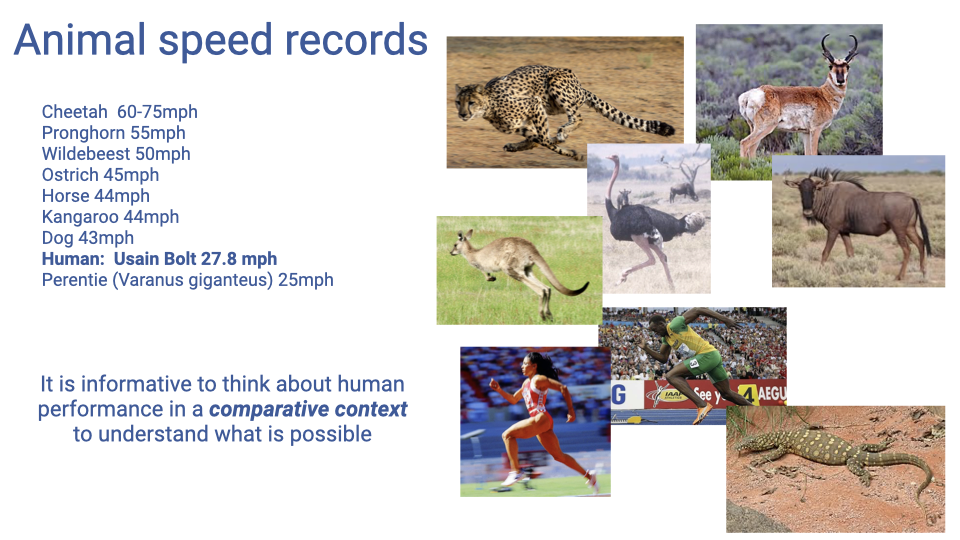
Animal speed records
| Animal | Top Speed |
|---|---|
| Cheetah | 60–75 mph |
| Pronghorn | 55 mph |
| Wildebeest | 50 mph |
| Ostrich | 45 mph |
| Horse | 44 mph |
| Dog | 43 mph |
| Usain Bolt (fastest human) | 27.8 mph |
| Ctenosaura similis (lizard) | 21 mph |
- Humans are not exceptional in speed — Usain Bolt cannot outrun any of the listed animals, and some lizards approach his top speed.
- However, humans are exceptional in endurance, particularly in hot conditions, due to superior heat-dissipating capacity (sweating, lack of fur).
- Horses and dogs can match human endurance distances in cold weather, but not in heat.
- Comparative context reveals what is physically possible across the diversity of animal solutions.
Slide 22
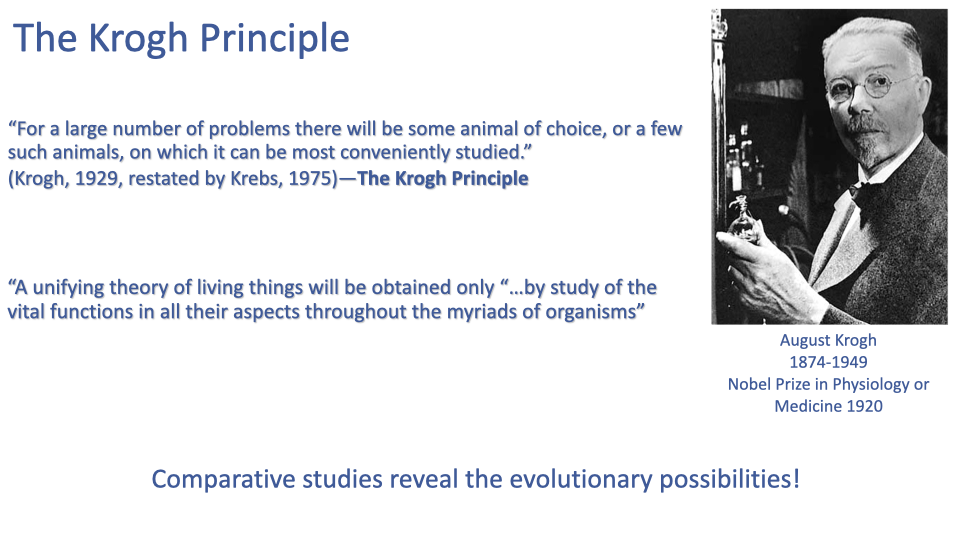
The Krogh Principle
“For a large number of problems there will be some animal of choice, or a few such animals, on which it can be most conveniently studied.” — Krogh (1929)
- August Krogh (1874–1949) received the Nobel Prize in Physiology or Medicine (1920).
- The principle states that for any physiological question, certain species are especially well-suited for study — either because they have exceptional performance in a particular trait or because their anatomy allows measurements not feasible in other species.
- Example: early studies on lung function and cardiorespiratory physiology were done in turtles, whose hard shell made certain measurements possible.
- Comparative studies reveal the evolutionary possibilities and contribute to a unifying understanding of living systems.
Slide 23
Two main comparative approaches
- “Case studies” or “model species” — study individual species with exceptional traits or unique experimental accessibility.
- Evolutionary approaches — examine functional diversity and variation among species within evolutionary lineages.
- Reference: Garland and Carter (1994) Annual Review of Physiology.
Slide 24
Approach 1 — Model species:
- Study specific animals that allow techniques not feasible in others, or that are especially well-adapted for a function to increase the “signal to noise” in understanding adaptation.
- Key questions: How do organisms work? What factors limit performance?
Approach 2 — Evolutionary diversity:
- Examine how physiological traits vary across related species within evolutionary lineages.
- While case studies reveal mechanisms, they don’t capture the full picture of how diversity and evolution shape different solutions.
Slide 25
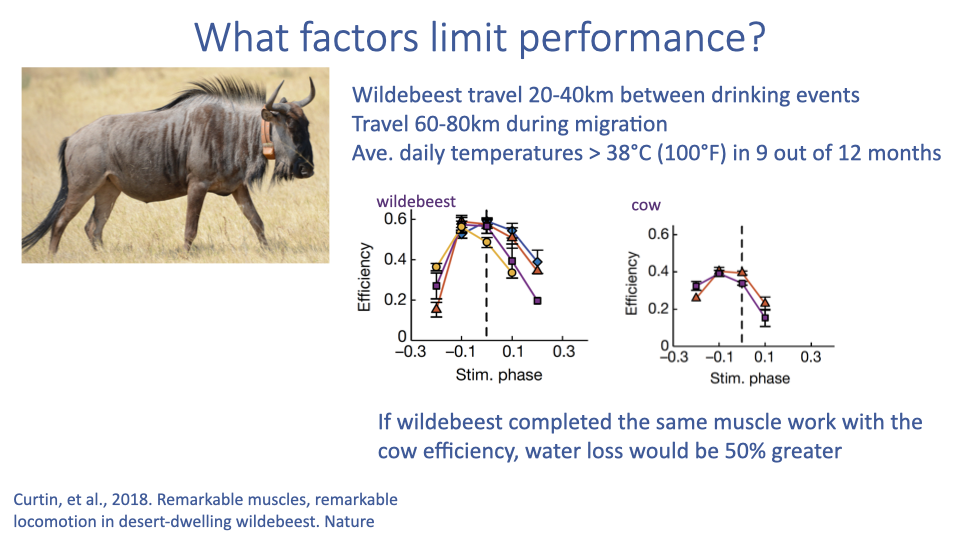
Case study: Wildebeest muscle efficiency
- Wildebeest are adapted to hot desert environments and travel 20–40 km between drinking events (60–80 km during migration), with average daily temperatures exceeding 34°C (100°F) for 9 out of 12 months.
- Researchers tracked wildebeest with collars, took muscle biopsies via helicopter blow-darting, and measured muscle performance in a field lab.
- Wildebeest muscle has significantly higher efficiency than cow muscle.
- Higher efficiency means lower heat waste and lower water loss — if wildebeest had cow-level muscle efficiency, their water loss would be 50% greater.
- This illustrates integrated function: muscle efficiency directly impacts water balance, thermoregulation, and endurance capacity.
- Reference: Curtis et al. (2018) Nature.
Slide 26
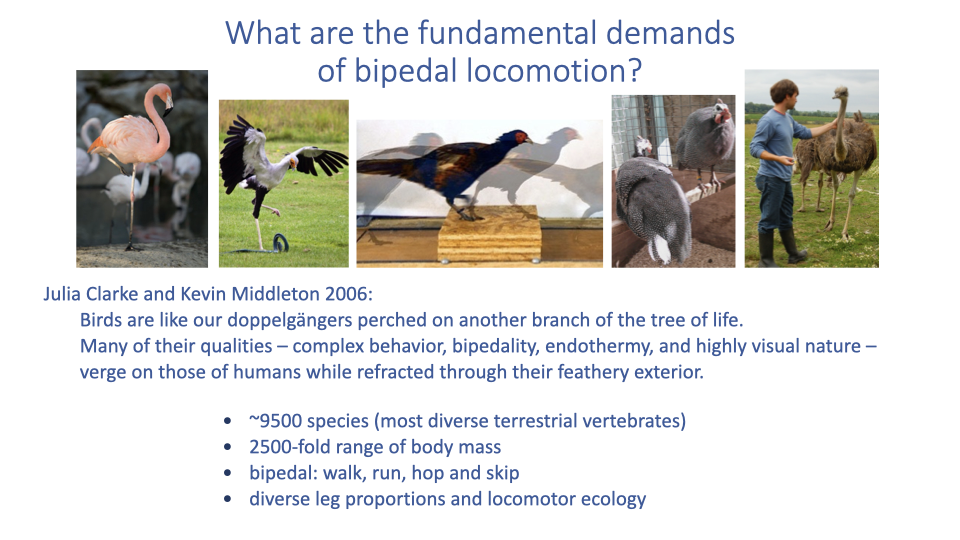
Case study: Bipedal locomotion in birds
- Birds share key traits with humans: bipedality, endothermy, complex behavior, and highly visual nature.
- Birds have a 250-million-year evolutionary legacy of bipedalism, compared to approximately 10 million years for humans.
- They are the most diverse terrestrial vertebrates: ~9,500 species spanning a 2,500-fold range of body mass.
- Birds use all physically possible bipedal gaits: walking, running, hopping, and skipping.
- Their diverse leg proportions and locomotor ecologies make them valuable for studying the fundamental demands of bipedal movement.
Slide 27
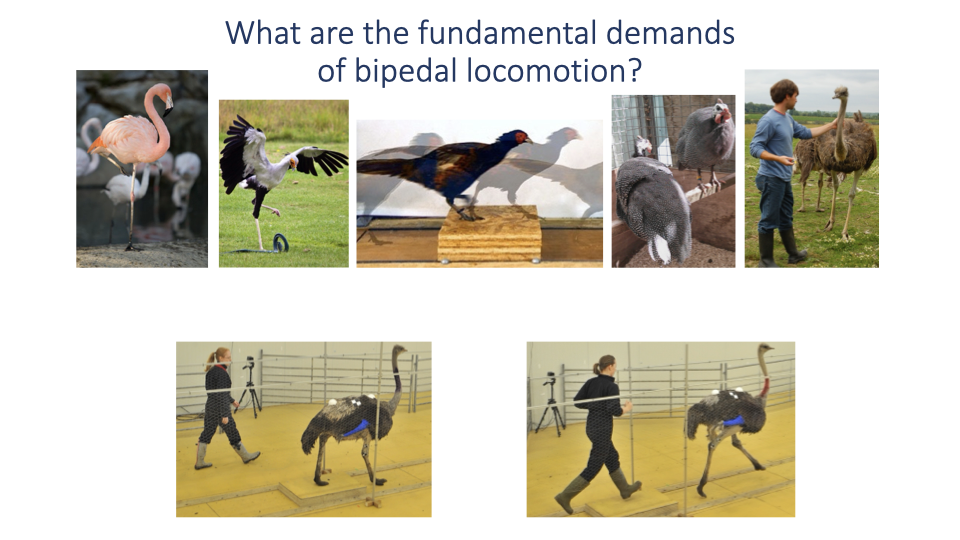
- The ostrich is the fastest biped on the planet (45 mph) and uses the same walking and running gaits as humans.
- From still images alone, one can distinguish walking from running in both humans and ostriches — this is because both species use fundamentally similar physical mechanisms (e.g., inverted pendulum in walking, spring-mass in running) despite completely different evolutionary histories.
- This represents convergent evolution in locomotor mechanics.
Slide 28
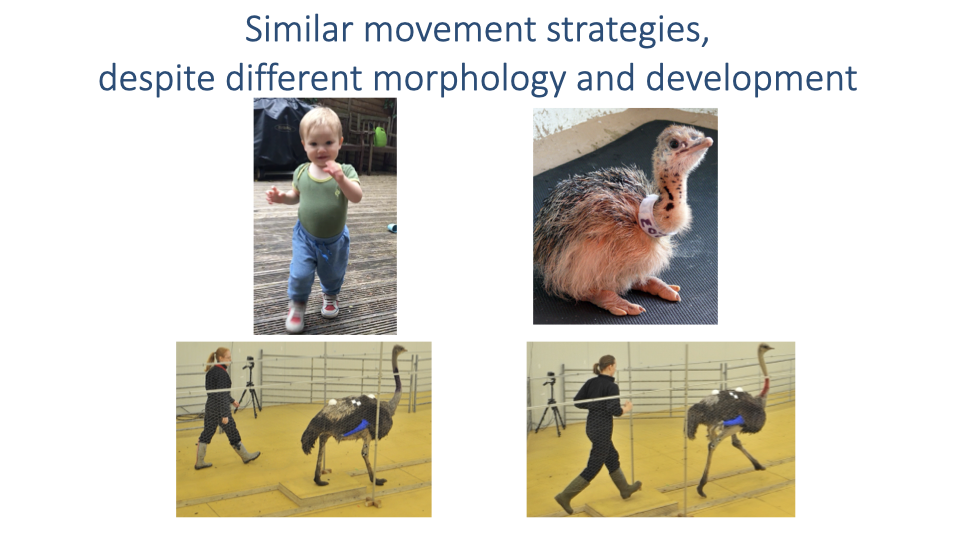
- Despite using similar adult gaits, humans and ostriches have fundamentally different development.
- Ostriches can walk and run like adults within 24 hours of hatching (precocial development).
- Human infants require hundreds of thousands of practice steps before achieving stable walking (altricial development).
- Yet both species converge on similar locomotor solutions as adults — a fascinating example of different developmental paths reaching similar functional outcomes.
Slide 29
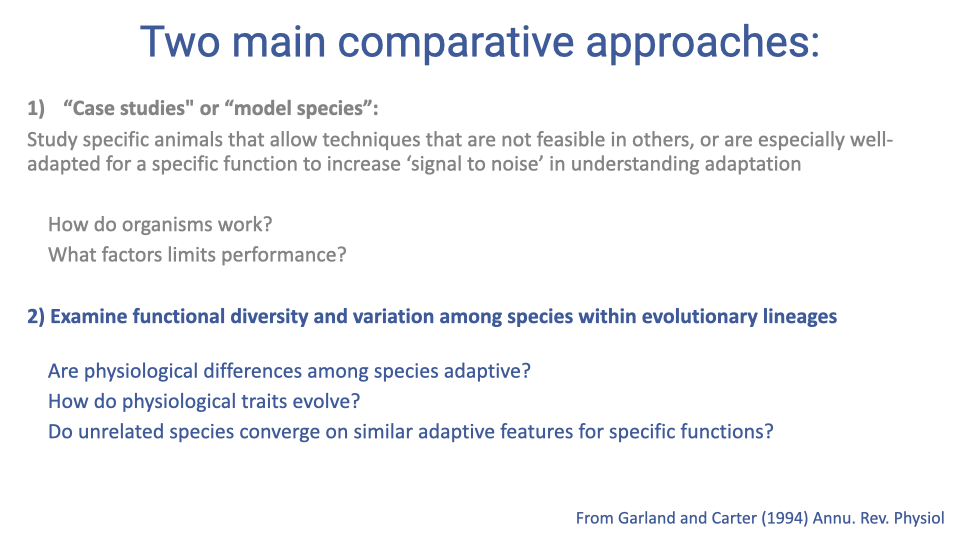
Approach 2 — Evolutionary diversity (expanded):
Key questions addressed by evolutionary comparative studies:
- Are physiological differences among species adaptive?
- How do physiological traits evolve?
-
Do unrelated species converge on similar adaptive features for specific functions?
- The bird/human bipedalism example illustrates convergent evolution — two unrelated lineages arriving at similar locomotor solutions.
Slide 30
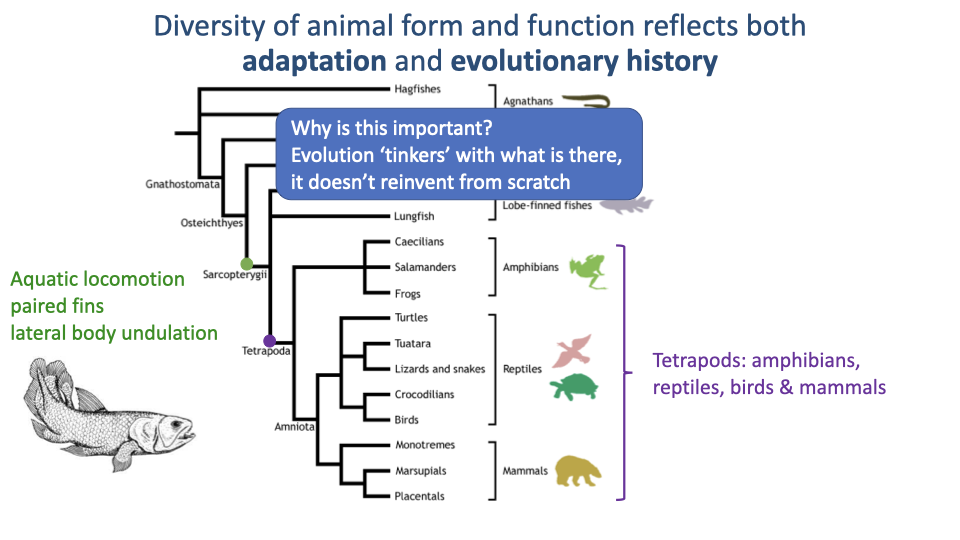
Evolutionary context: From fish to tetrapods
- All tetrapods (amphibians, reptiles, birds, mammals) share a common ancestor: a sarcopterygian fish that used paired fins and lateral body undulation for aquatic locomotion.
- Evolution tinkers with existing structures — it does not reinvent from scratch. Despite hundreds of millions of years of evolution, tetrapods retain anatomical features and physiological mechanisms inherited from this aquatic ancestor.
- This means that some features of human physiology reflect evolutionary constraints inherited from ancestors adapted to a completely different environment.
Slide 31
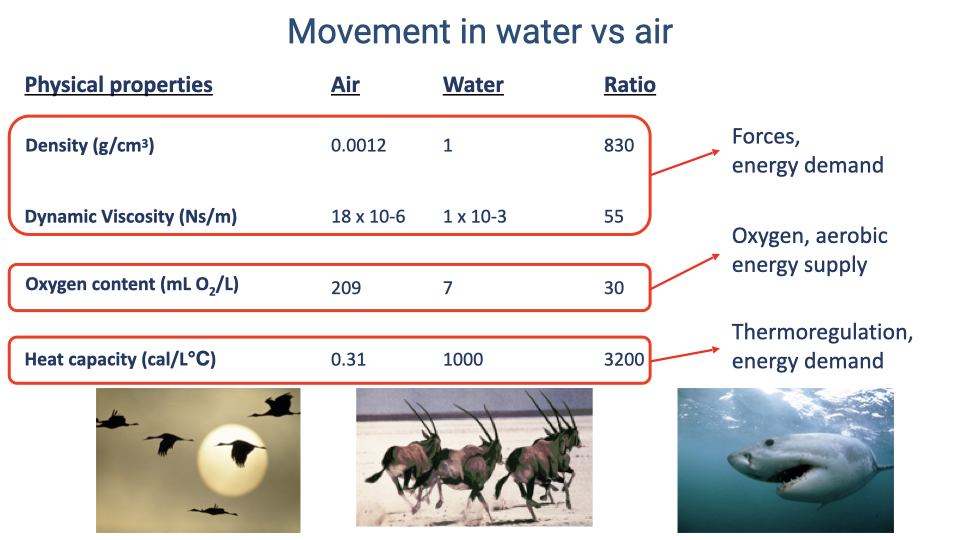
Physical properties: Air vs. water
| Property | Air | Water | Ratio |
|---|---|---|---|
| Density (g/cm3) | 0.0012 | 1 | 830x |
| Dynamic viscosity (Pa·s) | 18 x 10-6 | 1 x 10⁻³ | 55x |
| O2 content (mL O2/L) | 209 | 7 | 30x |
| Heat capacity (kJ/L·°C) | 0.31 | 3200 | ~10,000x |
- These differences profoundly influence the forces, energy demands, oxygen supply, and thermoregulation requirements of movement in each medium.
- Air contains 30 times more oxygen than water per unit volume.
- Water is 830 times denser than air, which affects drag and buoyancy.
Slide 32
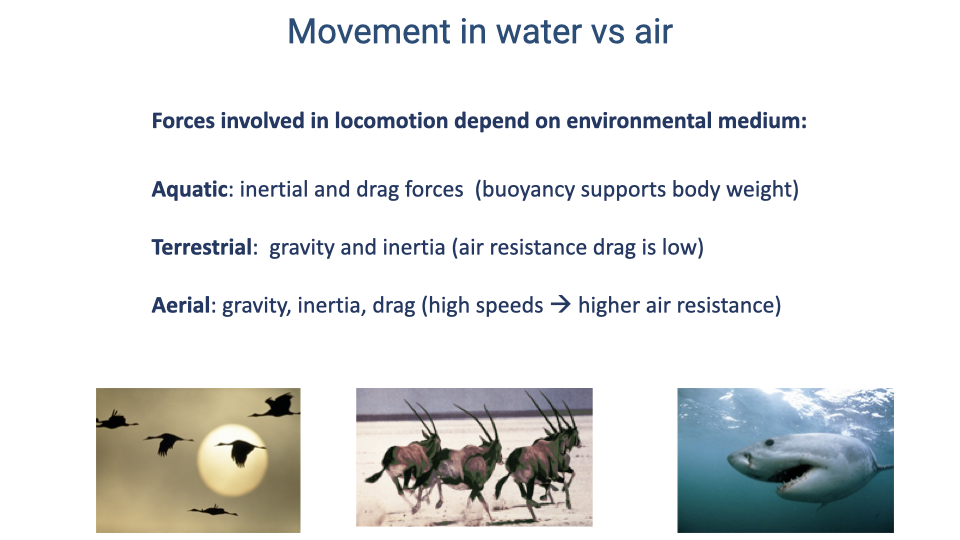
Forces by locomotor mode
- Aquatic — Major forces are inertial and drag forces; buoyancy supports body weight, so no muscular effort is needed to resist gravity.
- Terrestrial — Gravity and inertia are the dominant forces; air resistance is typically low at terrestrial speeds.
- Aerial — Gravity, inertia, and drag are all significant because flying animals move at higher speeds where air resistance becomes substantial.
Slide 33
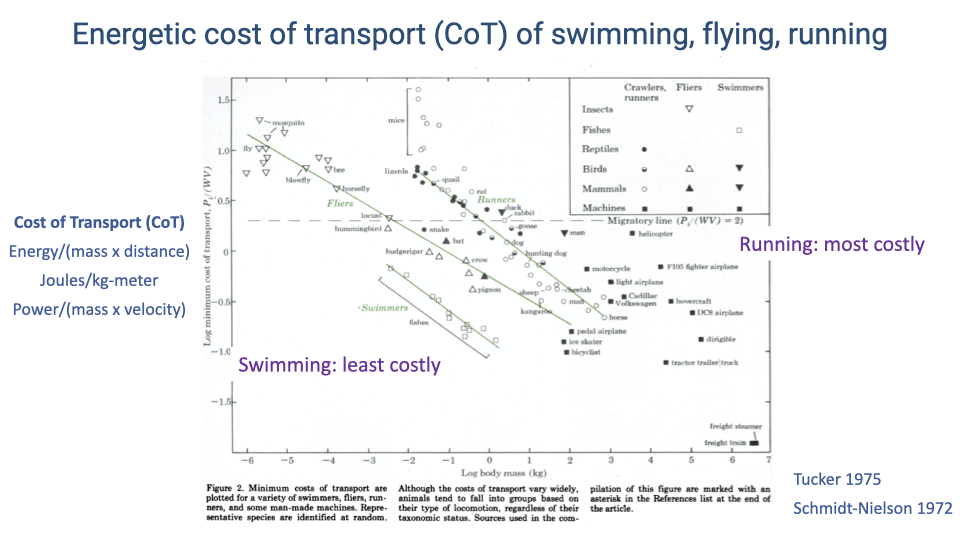
Energetic cost of transport (CoT)
- Cost of transport measures the energy required to move a unit of body mass over a unit of distance (J/kg·m). It allows comparison of locomotor efficiency across species and locomotor modes.
- On a log-log plot of body mass vs. CoT:
- Running is the most energetically costly mode
- Flying is intermediate
- Swimming is the least costly
- Running is expensive because of gravity and collisional energy losses each time a limb strikes the ground.
- Swimming is cheap because buoyancy supports body weight, eliminating the cost of resisting gravity.
- Flying animals move faster, so despite drag costs, the energy per unit distance is lower than running.
- References: Tucker (1975), Schmidt-Nielsen (1972).
Slide 34
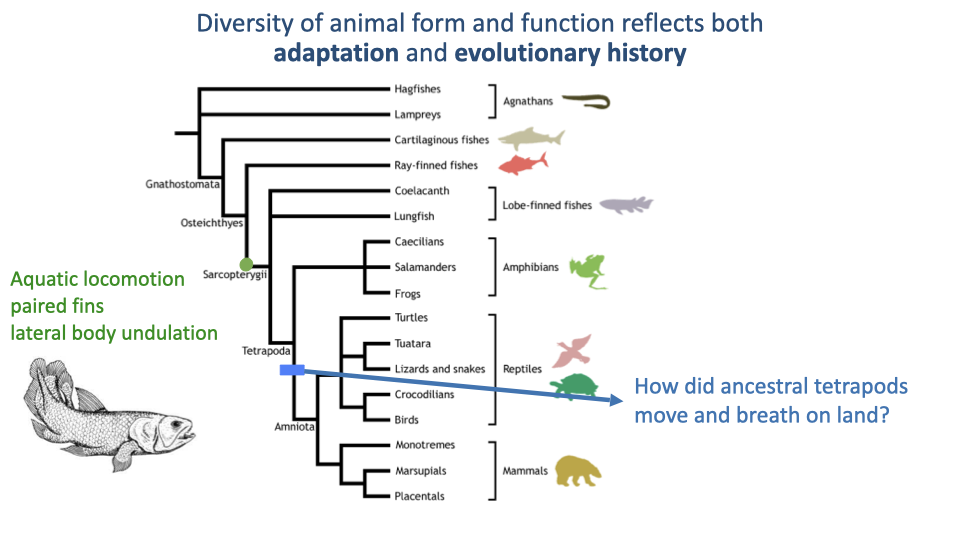
- A central evolutionary question: How did ancestral tetrapods move and breathe on land?
- The transition from aquatic to terrestrial locomotion required fundamental changes in both the mechanics of movement and the mechanics of breathing.
- The inherited body plan from aquatic ancestors created constraints that influenced how early land animals could move and ventilate simultaneously.
Slide 35
Early tetrapod locomotion
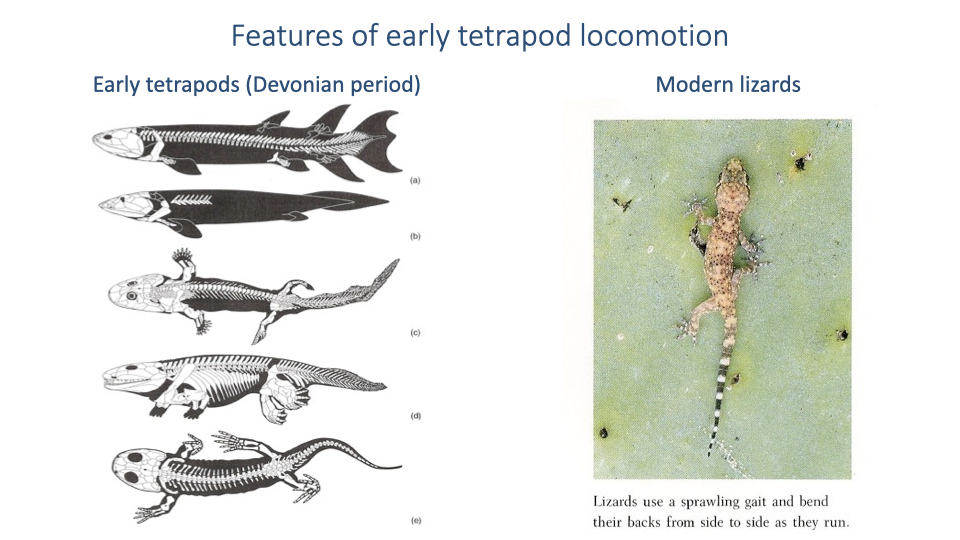
- Early tetrapods (Devonian period) had a body plan resembling a fish with legs — sprawling posture with lateral body undulation for propulsion.
- Modern lizards retain this ancestral locomotor pattern: they bend their trunk from side to side during locomotion, similar to how a fish undulates in water.
- This lateral bending engages the trunk muscles — the same muscles required for breathing.
Slide 36
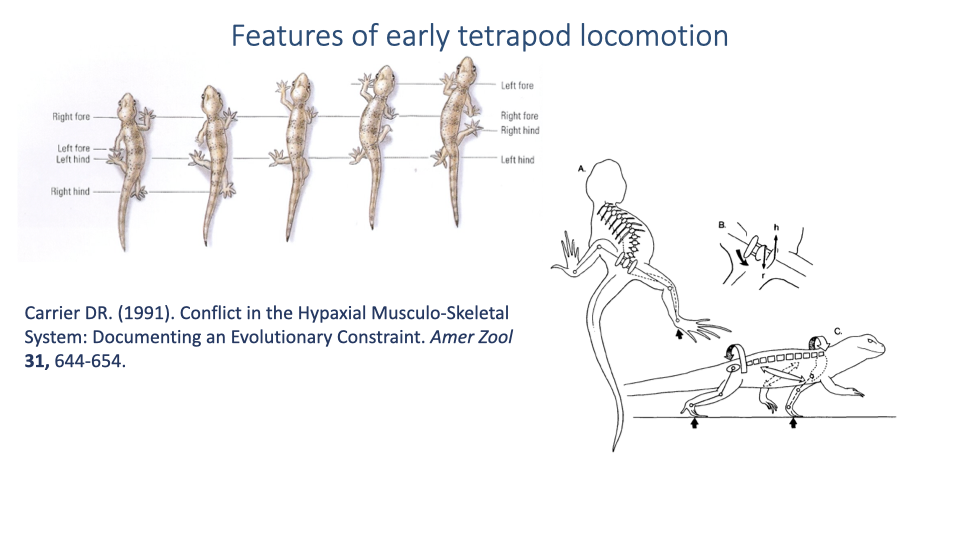
Mechanical conflict: locomotion vs. breathing
- In sprawling tetrapods, the intercostal muscles and abdominal muscles serve dual roles: powering breathing (ventilation) and stabilizing/bending the trunk during locomotion.
- Early tetrapods lacked a diaphragm — a structure unique to mammals — so they relied entirely on these trunk muscles for ventilation.
- This creates a fundamental mechanical constraint: the same muscles cannot efficiently serve both locomotion and breathing simultaneously.
- Reference: Carrier (1991) “Conflict in the Hypaxial Musculo-Skeletal System.” American Zoologist 31, 644–654.
Slide 37
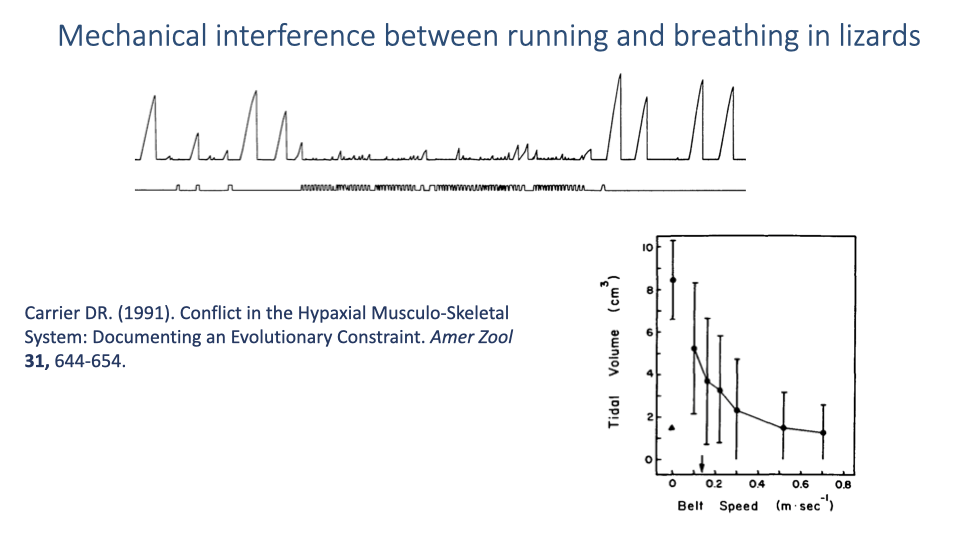
Evidence: Tidal volume decreases with locomotion in lizards
- At rest, lizards show large, regular tidal volumes.
- As treadmill speed increases (0 to 0.8 m/s), tidal volume decreases from ~4 cm3 to ~1.5 cm3.
- This is the opposite of what would be expected — tidal volume should increase with exercise to meet higher metabolic demands.
- The decrease demonstrates that locomotion mechanically impairs breathing in sprawling tetrapods.
- Reference: Carrier (1991).
Slide 38
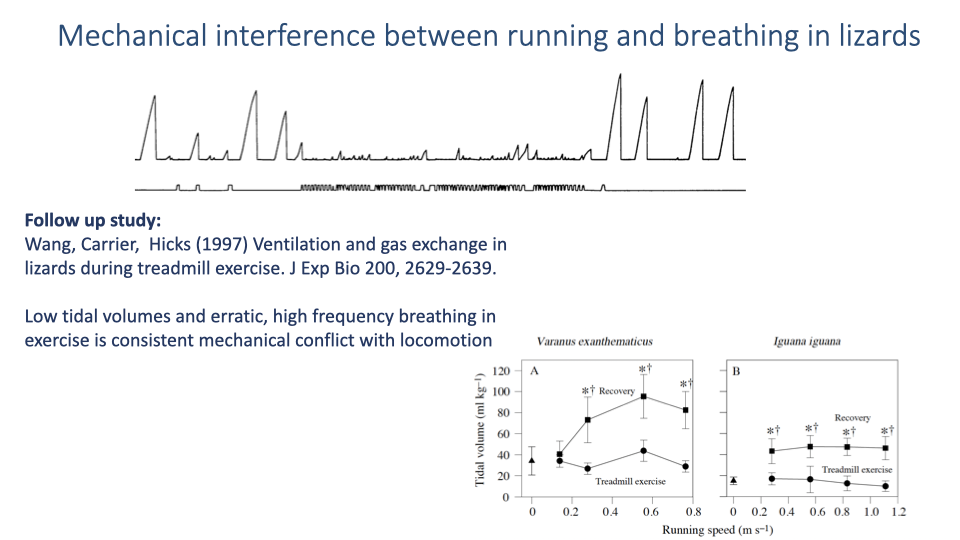
- Follow-up study by Wang, Carrier, and Hicks (1997) confirmed these findings.
- During treadmill exercise, lizards show low tidal volumes and erratic, high-frequency breathing.
- This pattern is consistent with a mechanical conflict between locomotion and ventilation — the trunk muscles cannot serve both functions effectively at the same time.
- Reference: Wang, Carrier, Hicks (1997) J. Exp. Biol. 200, 2629–2639.
Slide 39
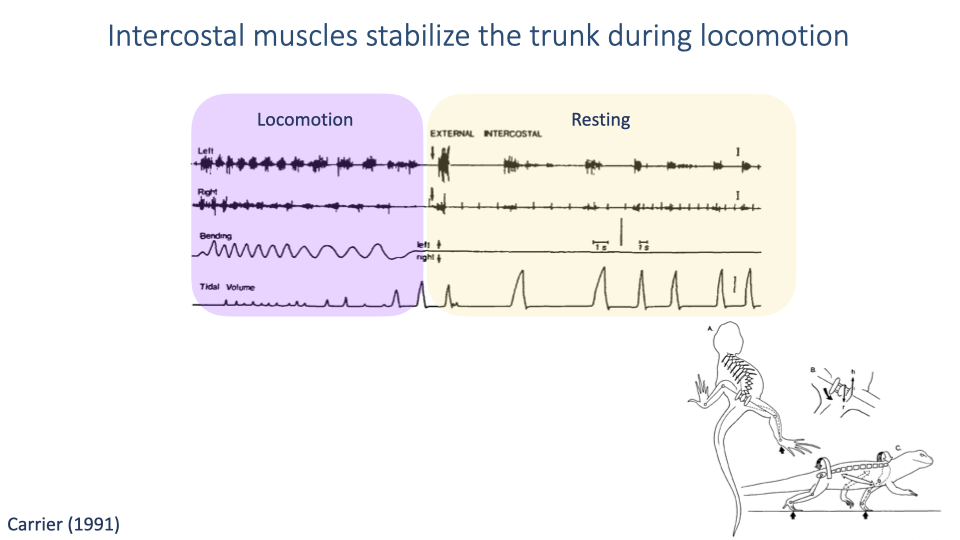
EMG evidence for dual muscle function
- Electromyography (EMG) recordings from Carrier (1991) demonstrate the mechanical conflict directly:
- At rest: intercostal muscles fire only during breathing cycles (ventilatory function).
- During locomotion: the same intercostal muscles fire rhythmically with each stride (trunk stabilization function), overriding their ventilatory role.
- This confirms that intercostal muscles are recruited for trunk stabilization during locomotion, compromising their ability to power breathing.
Slide 40
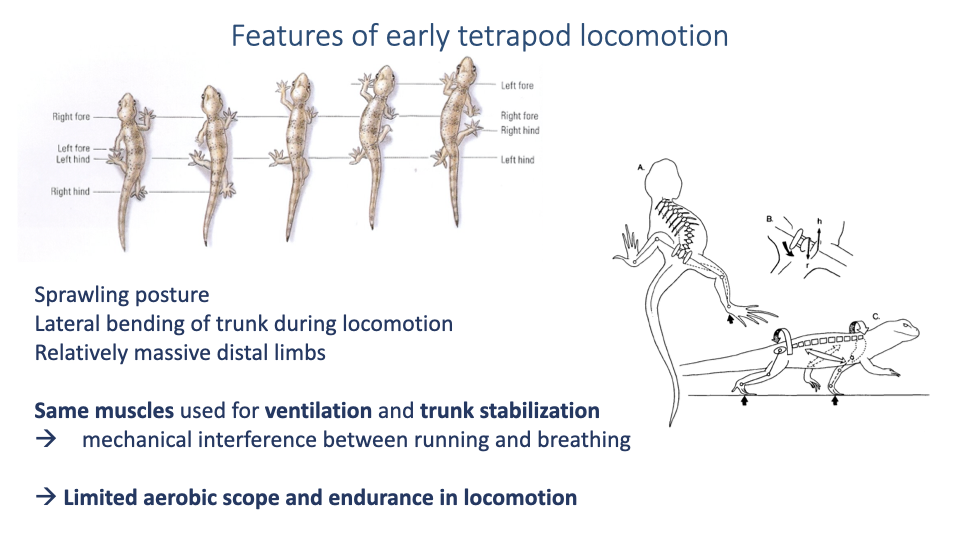
Summary: Early tetrapod locomotion
Key features inherited from the aquatic ancestor:
- Sprawling posture with lateral bending of the trunk during locomotion
- Relatively massive distal limbs
- Same muscles (intercostal, hypaxial) used for both ventilation and trunk stabilization
- Mechanical interference between running and breathing
- Result: limited aerobic scope and endurance in locomotion
Slide 41
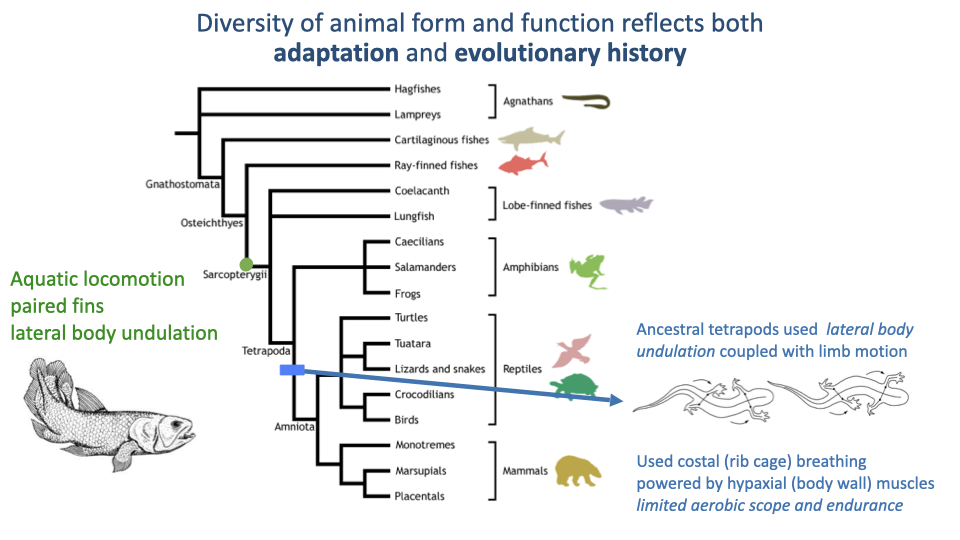
- Ancestral tetrapods used lateral body undulation coupled with limb motion — inherited from their fish ancestor.
- They used costal (rib cage) breathing powered by hypaxial body wall muscles.
- This combination led to limited aerobic scope and endurance in locomotion.
- Two lineages — mammals and birds — independently evolved features that overcame this ancestral constraint (to be discussed in subsequent lectures).
Slide 42
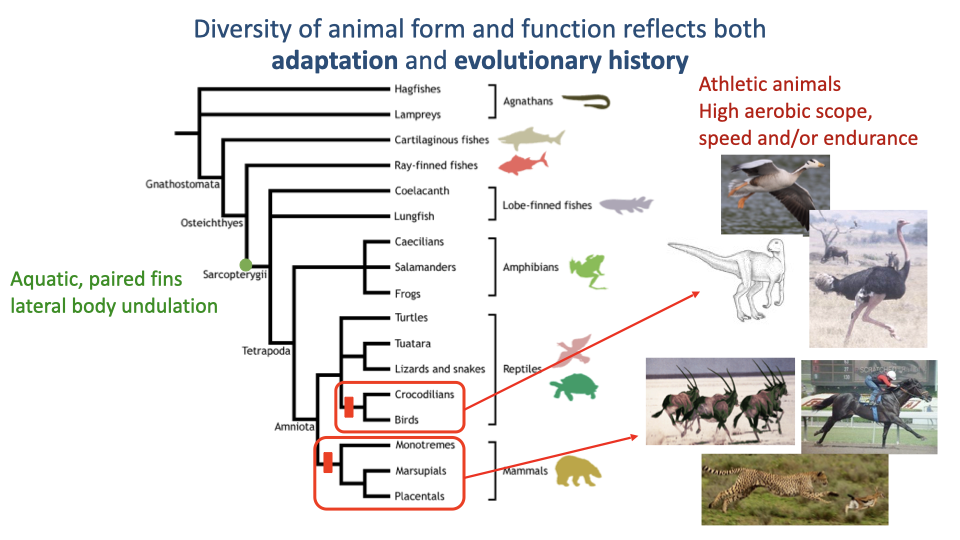
- Certain lineages within mammals and birds have evolved to become highly athletic animals with high aerobic scope, speed, and/or endurance.
- These lineages independently evolved solutions to the ancestral constraint on simultaneous running and breathing:
- Mammals evolved the diaphragm and erect posture, decoupling trunk bending from locomotion.
- Birds evolved a rigid trunk with a flow-through lung system.
- The phylogenetic distribution of athletic performance reflects both adaptation and evolutionary history.
Slide 43
Lecture 1 — Key takeaways
- Many features of animal morphology and physiology (form and function) reflect adaptation for movement and energy delivery to tissues.
- The comparative approach provides insight into fundamental mechanisms — how animals work.
- The comparative approach provides evolutionary context to understand adaptive features and performance limits.
Glossary of Key Terms
| Term | Definition |
|---|---|
| Exercise physiology | The study of the physiological mechanisms that govern movement and responses to physical activity, including the respiratory, cardiovascular, and musculoskeletal systems. |
| Comparative approach | A research framework that studies physiological and biomechanical principles across multiple species to understand fundamental mechanisms and evolutionary adaptations. |
| Krogh Principle | The principle that for any given physiological problem, there exists an ideal animal species on which it can be most conveniently studied (Krogh, 1929). |
| Cost of transport (CoT) | The energy required to move a unit of body mass over a unit of distance (J/kg·m), used to compare locomotor efficiency across species and locomotor modes. |
| Tetrapod | A vertebrate animal with four limbs (or descended from four-limbed ancestors), including amphibians, reptiles, birds, and mammals. |
| Sarcopterygian fish | Lobe-finned fish; the common aquatic ancestor of all tetrapods, which used paired fins and lateral body undulation for locomotion. |
| Lateral body undulation | A locomotor pattern in which the trunk bends side-to-side during movement, inherited from aquatic ancestors and retained in modern lizards and salamanders. |
| Sprawling posture | A limb configuration in which the legs extend laterally from the body (as in lizards), as opposed to the erect posture of mammals and birds. |
| Hypaxial muscles | The muscles of the body wall below the vertebral column (including intercostals and abdominals) that are used for both ventilation and trunk stabilization during locomotion. |
| Mechanical constraint | A physical limitation arising from the dual use of trunk muscles for both breathing and locomotion in sprawling tetrapods, limiting simultaneous aerobic capacity. |
| Convergent evolution | The independent evolution of similar features or functions in unrelated lineages — e.g., bipedal locomotion in humans and birds. |
| Aerobic scope | The range between resting and maximal aerobic metabolic rate; a measure of an animal’s capacity for sustained physical activity. |
| Precocial development | A developmental pattern in which offspring are relatively mature and mobile shortly after birth or hatching (e.g., ostriches). |
| Altricial development | A developmental pattern in which offspring are relatively immature and dependent at birth, requiring extended periods of parental care and practice to develop motor skills (e.g., humans). |
| Diaphragm | A dome-shaped muscle unique to mammals that separates the thoracic and abdominal cavities and is the primary muscle of breathing, enabling ventilation independent of trunk locomotion. |